OEM vs. ODM vs. Private Label: Which Is Right for Your Brand?
When sourcing products from China, choosing the right manufacturing model can have a major impact on your product, budget, and brand. OEM, ODM, and Private Label each offer different levels of customization, investment, and control.
Understanding the differences can help you choose the approach that best fits your business.
1. What Is OEM?
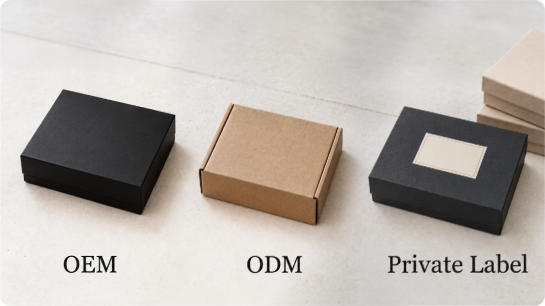
OEM (Original Equipment Manufacturing) allows you to have a product manufactured according to your own design and specifications.
You typically have greater control over materials, features, dimensions, packaging, and branding. OEM is a good option for businesses that already have a developed product concept and want something more unique.
Best for: Established brands, custom products, and businesses seeking greater product control.
2. What Is ODM?
ODM (Original Design Manufacturing) means the manufacturer already has an existing product design that you can customize to some extent.
You may be able to modify features, colors, materials, packaging, or branding without developing the entire product from scratch. This can reduce development time and costs.
Best for: Businesses that want customization without designing a completely new product.
3. What Is Private Label?
With Private Label, you purchase an existing product and sell it under your own brand name. Customization is usually limited to branding, packaging, colors, or other available options.
It is often one of the fastest and more affordable ways to launch a product.
Best for: Startups, new brands, and businesses testing products with a smaller initial investment.
4. OEM vs. ODM vs. Private Label
| Model | Customization | Cost | Development Time | Best For |
|---|---|---|---|---|
| OEM | High | Higher | Longer | Unique products |
| ODM | Medium | Moderate | Medium | Customized existing designs |
| Private Label | Low | Lower | Shorter | Fast brand launches |
5. Which Model Is Right for You?
The right choice depends on your goals.
Choose OEM if you need a highly customized product and have the budget and time for development.
Choose ODM if you want an existing design with modifications while keeping development costs more manageable.
Choose Private Label if your priority is launching quickly with an existing product under your own brand.
6. Final Thoughts
There is no single best manufacturing model for every business. OEM provides the most control, ODM offers a balance between customization and cost, while Private Label provides a faster and simpler way to launch.
Before choosing a supplier, consider your budget, product requirements, expected order volume, timeline, and long-term branding goals. The right manufacturing model can make your China sourcing process more efficient and help set your brand up for growth.
Request a Quote